Lammas & Lughnasadh
The Grain, the Land and the Practices of Our Lands

The two traditions are cousins, shaped by the same northern light and the same agricultural necessity, yet each carries the distinct accent of its own land and people. There is a quiet insistence in these customs that the sacred is not somewhere else. It is already present in the turning of the local year, in the ripening of grain that has been grown on this particular earth for millennia. One need not travel to distant traditions in order to find a spiritual practice that is rooted, coherent, and alive. The English and the Irish already possess calendars that answer to the soil under their feet.
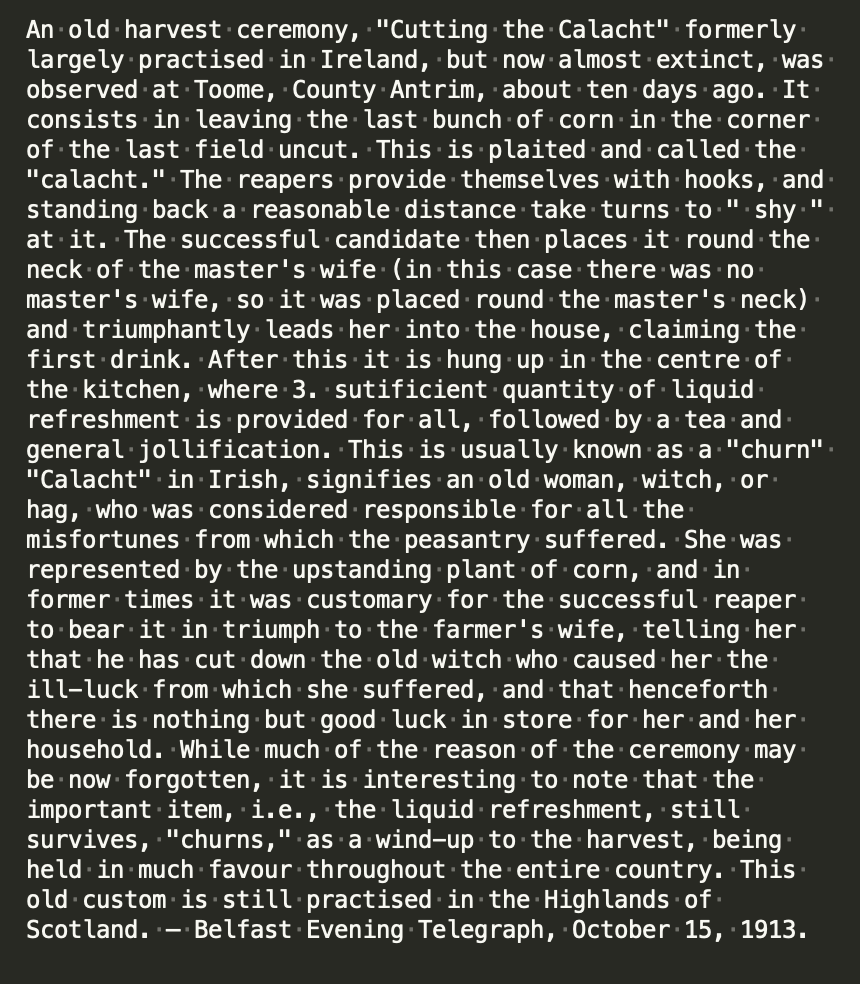
Remembering them is less an act of revival than an act of recognition. If you have no barn, the old protective gesture can still be made. Bake or buy a simple loaf, preferably of grain that has been grown as near to you as possible. Break it into four and place a piece in each corner of your garden, or of the small plot of earth you tend. The birds and small animals will take what they need, and in a season of widespread drought a saucer of clean water left nearby becomes an offering of the most practical kind. These gestures are modest, yet they re-establish a conversation with the living world that the old practices always assumed. Deeper still lies the custom of the corn dolly, or corn mother.

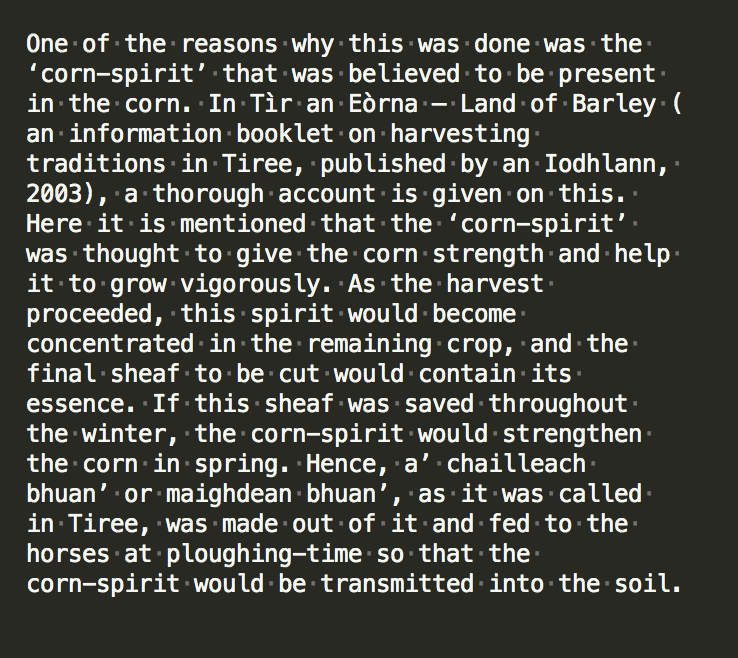
In many parts of England and Ireland the last sheaf of the harvest was fashioned into a figure, for it was believed that the spirit of the corn retreated before the reapers and took refuge in the final standing stalks. That spirit was housed through the winter in the carefully made dolly, kept dry and respected, and then returned to the earth in the first furrow of the spring ploughing so that the life of the crop might begin again. Even if you have no field of your own, you may still work with this understanding. A simple plait of wheat, barley, or even dried grasses can serve. Keep it through the darker months as a focus of attention and gratitude, then bury or compost it at the first turning of the soil in spring.
In this way the cycle is honoured, the spirit of the grain is acknowledged, and the continuity between one harvest and the next is quietly maintained. Sacred sites across these islands, whether stone circles, holy wells, or the remains of ancient field systems, stand within the same seasonal rhythm. To walk them at Lammas or Lughnasadh with an awareness of the first fruits is to place oneself inside a conversation that has been conducted for a very long time.
The land does not require novelty. It asks only that we notice what has always been offered, and that we answer in kind.


Comments